


How to Choose the Right Power Supply for Industrial, LED, PoE and Security Devices
Power supply selection is often treated as a simple voltage and wattage match, but this is rarely enough for real projects. A power supply used in a control cabinet, LED lighting system, CCTV network, PoE device, access control system or medical-related equipment must be checked against load behavior, heat, cable loss, protection design, certification requirements and long-term operating conditions.
A model that works during a short bench test may still fail after several months in a closed cabinet, outdoor box or continuous-duty device. Voltage drop, poor ventilation, undersized wattage, wrong connector polarity or an unsuitable adapter type can cause unstable operation, early failure and repeated maintenance.
This guide explains how to choose the right power supply from an engineering and procurement perspective, including industrial power supplies, LED driver power supplies, PoE power adapters, security power supplies, medical power supplies and external AC/DC power adapters.

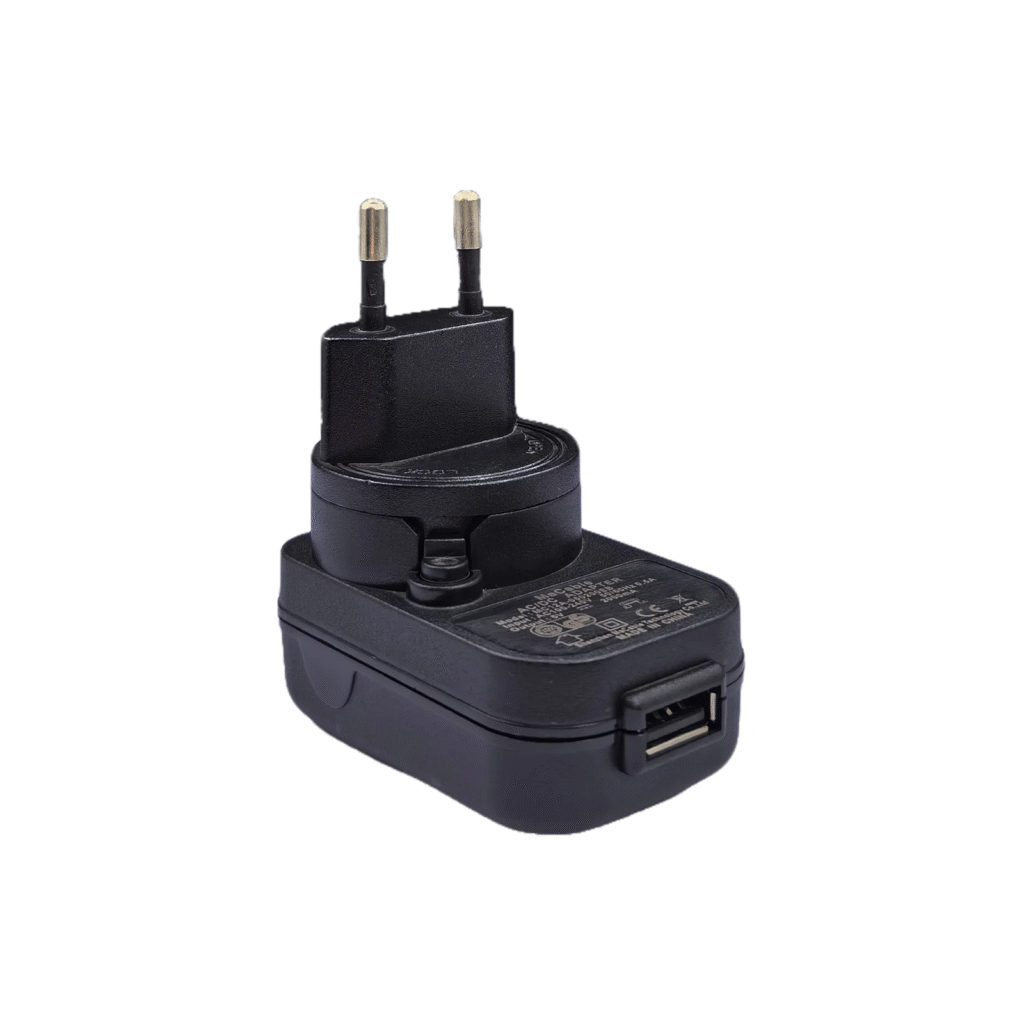
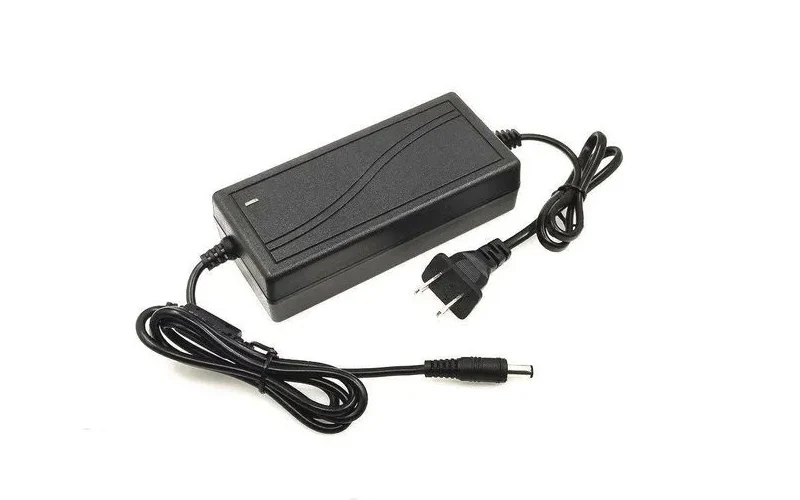
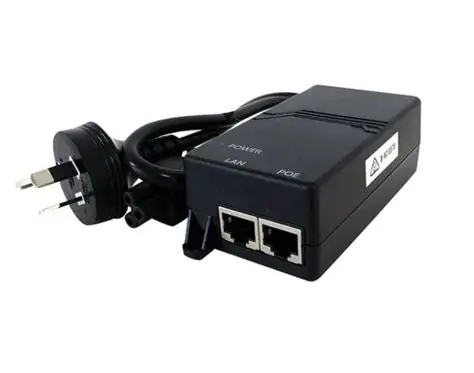
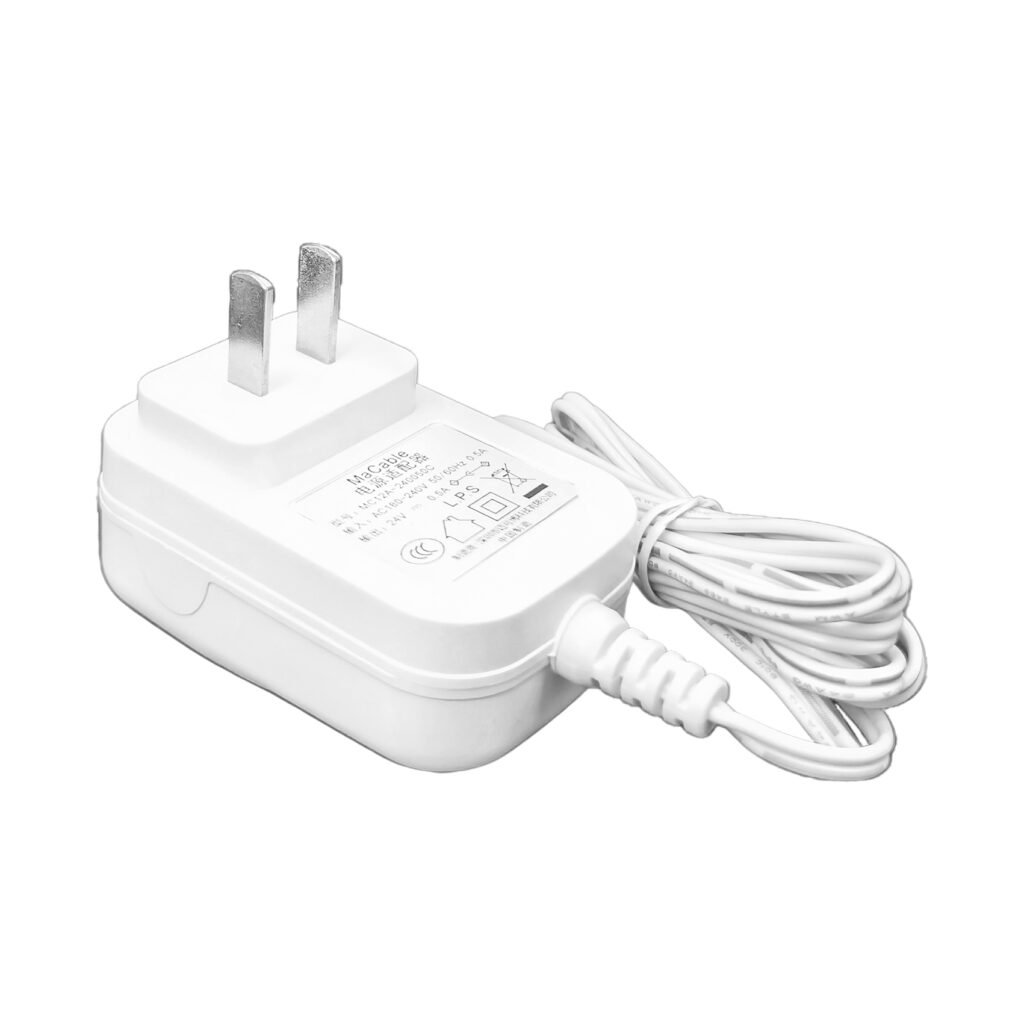

Table of Contents
- 1. Start with the real load condition
- 2. Confirm voltage, current and wattage correctly
- 3. Leave enough power margin
- 4. Check cabinet temperature and ventilation
- 5. Choose the right power supply type
- 6. Consider cable loss in CCTV and access control systems
- 7. Review protection functions
- 8. Confirm certification and target market requirements
- 9. Use medical-grade power supplies when required
- 10. Check connector, cable and sample details
- 11. Common power supply selection mistakes
- 12. Final procurement checklist
- 13. FAQ
1. Start with the real load condition
The first step is not choosing a catalog model. The first step is listing every device that will be connected to the power supply. In a control cabinet or low-voltage system, this may include PLCs, HMIs, sensors, relays, indicator lights, CCTV cameras, access control locks, LED strips, fans, routers, PoE devices or communication modules.
Each load should be checked for rated voltage, rated current and peak current. Some devices draw more current at startup or during switching. Relay coils, solenoid locks, infrared CCTV cameras, LED strips and motorized devices may have higher current demand than their normal running value.
If the power supply is selected only according to the normal current, the system may work during light operation but become unstable when several loads start at the same time. Typical symptoms include camera rebooting, LED flickering, relay chatter, controller reset, weak lock action or abnormal device alarms.
2. Confirm voltage, current and wattage correctly
Voltage must match the device requirement. A 12V device should not be powered by a 24V supply unless the product clearly supports that input range. A 24V PLC system should not be connected to a 48V source. Incorrect voltage may damage the device immediately or shorten component life over time.
Current is different. A power supply with a higher current rating does not force that full current into the device. The load draws the current it needs, provided the voltage is correct and the connector, wiring and protection design are suitable. For example, a 24V 5A power supply can usually power a 24V device that draws 2A, but a 24V 2A supply should not be used for a 24V system that requires 4A.
| Item | How to Check | Common Risk if Ignored |
|---|---|---|
| Output voltage | Match the device input voltage exactly | Device damage or unstable operation |
| Output current | Total all connected loads and allow margin | Voltage drop, reset or overheating |
| Output wattage | Voltage × current | Wrong model comparison |
| Input range | Check 100–240V AC or wider input support | Not suitable for export markets |
| Output ripple and noise | Confirm when used for sensitive electronics | Signal interference or unstable performance |
| Connector and polarity | Confirm plug size, pin polarity and cable length | Sample rejection or device failure |
3. Leave enough power margin
A power supply should not run continuously at 100% of its rated output. In real installations, temperature, cable length, airflow, load fluctuation and dust can all reduce long-term stability. For many applications, a 20–30% reserve margin is a practical starting point. For high temperature, long working hours or future expansion, a larger margin is safer.
Here is a simple cabinet load example:
| 24V DC Load | Quantity | Current per Unit | Total Current |
|---|---|---|---|
| PLC controller | 1 | 0.8A | 0.8A |
| HMI panel | 1 | 0.7A | 0.7A |
| Sensors | 8 | 0.1A | 0.8A |
| Relay modules | 6 | 0.15A | 0.9A |
| Indicator lights and small fans | - | - | 0.6A |
| Total working current | - | - | 3.8A |
In this case, a 24V 4A supply is too close to the actual load. A 24V 5A model may work in a clean and well-ventilated cabinet. If the cabinet is hot, closed or expected to run continuously, a 24V 6A or 24V 8A model is a safer choice. The final decision should also consider peak current and expansion plans.
4. Check cabinet temperature and ventilation
Heat is one of the most common reasons for early power supply failure. The temperature inside a cabinet is often higher than the surrounding room temperature, especially when the cabinet contains contactors, drives, relays, transformers or dense wiring.
When selecting a cabinet power supply, check whether the unit has enough ventilation space, suitable housing design and a practical derating range. A compact model may save space, but it should not be installed tightly against other heat-generating components. If several power supplies are installed side by side, spacing and airflow should be planned before final assembly.
For outdoor boxes, machine interiors or enclosed systems, do not rely only on nominal wattage. The actual operating temperature, duty cycle and ventilation condition should be included in the selection decision.
5. Choose the right power supply type
Different applications require different power supply structures. Choosing the wrong type may create installation problems even when the voltage and wattage appear correct.

| Power Supply Type | Typical Use | Selection Focus |
|---|---|---|
| Industrial switching power supply | Control cabinets, equipment interiors, automation systems | Output capacity, terminals, heat dissipation, protection |
| External power adapter | Routers, monitors, small devices, electronic products | Plug type, DC connector, enclosure, certification |
| LED driver power supply | LED strips, signage, lighting projects | Voltage, wattage per meter, heat, installation length |
| PoE power adapter | IP cameras, wireless APs, VoIP devices | PoE standard, wattage, voltage, data speed |
| Security power supply | CCTV, access control, alarm systems | Channel distribution, cable distance, backup needs |
| Medical power supply | Medical-related equipment and instruments | Leakage current, isolation, medical safety compliance |
For LED strips and signage projects, the power supply should be selected according to LED strip voltage, wattage per meter, total installation length and heat condition. A constant-voltage LED installation should not be evaluated in the same way as a small external adapter or a cabinet-mounted industrial supply.
For network-powered devices such as IP cameras, wireless access points or VoIP terminals, a PoE power adapter should be checked by PoE type, output power, device compatibility and network speed requirement.
6. Consider cable loss in CCTV and access control systems
Voltage drop is a frequent problem in CCTV and access control projects. A power supply may output 12V or 24V correctly at the terminal, but the device at the end of a long cable may receive a lower voltage. This is especially common when several cameras or locks share one centralized power source.
Symptoms may appear only at certain times. For example, a CCTV camera may work during daytime but reboot at night when infrared LEDs turn on. An access control lock may work during testing but become weak when multiple doors operate. These problems are often caused by cable length, wire gauge, load current or poor terminal contact.
For security projects, the selection should consider the number of devices, power distribution method, voltage, current, cable distance and installation environment.
7. Review protection functions
Protection functions are not marketing details. They help reduce damage when wiring mistakes, overloads or abnormal conditions occur. A reliable power supply should be evaluated for short-circuit protection, overload protection, over-voltage protection and over-temperature protection.
These protections do not replace proper system design. If the load is too large or the cabinet is too hot, the correct answer is not simply relying on protection circuits. The power supply should be selected with enough margin and installed under reasonable operating conditions.
| Protection Function | Purpose | Why It Matters |
|---|---|---|
| Short-circuit protection | Limits damage during wiring faults | Useful during installation and maintenance |
| Overload protection | Protects when load exceeds rated output | Reduces overheating and shutdown risk |
| Over-voltage protection | Prevents abnormal high output voltage | Protects downstream electronics |
| Over-temperature protection | Responds to excessive internal heat | Important for enclosed cabinets and long operation |
8. Confirm certification and target market requirements
For export orders, electrical performance is only one part of the selection process. The target market may require specific safety marks, energy efficiency levels, EMC compliance, plug standards, labeling language or packaging information.
Buyers should confirm whether the application requires CE, UL, FCC, UKCA, RoHS, IEC 62368-1, IEC 60601-1, DoE, ErP or other standards. The exact requirement depends on the product type, end use and destination market. These items should be confirmed before sample approval, not after bulk production.
For external adapters, the plug type and cable standard are also important. A technically correct adapter may still be rejected if the plug, label, certificate or packaging does not match the target market.
9. Use medical-grade power supplies when required
Medical-related devices should not use ordinary commercial adapters unless the final equipment design allows it and the safety evaluation confirms it. Medical power supply selection usually involves stricter requirements for leakage current, isolation, reliability and safety compliance.
For monitors, diagnostic devices, therapy-related equipment or medical instruments, the required output voltage, current, leakage current requirement, isolation level, connector type, cable length, certification and labeling requirements should be confirmed before sample approval.
When the final product is used in a regulated medical environment, the power supply should be selected as part of the whole device compliance plan, not as an interchangeable accessory.

10. Check connector, cable and sample details
Many power supply samples fail not because of the circuit, but because of small physical details. The output voltage and current may be correct, while the DC plug is wrong, the polarity is reversed, the cable is too short, the wire gauge is too small or the plug does not fit the target country.
Before sample production, the following details should be confirmed in writing:
- Output voltage and rated current
- Input voltage range and plug type
- DC connector size and polarity
- Cable length and wire gauge
- Desktop type, wall-mount type or interchangeable plug type
- Label content, logo requirement and model number
- Certification marks required for the destination market
- Packaging method and user manual requirement
11. Common power supply selection mistakes
Most power supply problems come from a few repeated mistakes. These issues are easy to avoid if they are checked before ordering samples.
| Mistake | Possible Result | Better Practice |
|---|---|---|
| Selecting wattage too close to the load | Overheating, voltage drop, early failure | Leave 20–30% or higher margin |
| Ignoring startup current | Random reset or unstable switching | Check peak current, not only rated current |
| Using one centralized supply for long cable runs | Voltage drop at the device side | Check cable length, wire gauge and distribution design |
| Choosing a commercial adapter for industrial use | Poor installation fit or weak durability | Use an industrial power supply when cabinet installation is required |
| Checking certification after production | Market entry or customs problems | Confirm standards before sampling |
| Ignoring connector details | Sample cannot be used directly | Confirm plug, polarity, cable and label before production |
12. Final procurement checklist
A clear inquiry allows the supplier to recommend the correct model and reduces repeated sample adjustments. Before requesting a quotation, prepare the following information:
| Information to Provide | Example Details |
|---|---|
| Application | Control cabinet, LED strip, CCTV, access control, PoE device, medical device, electronic product |
| Input requirement | 100–240V AC, 50/60Hz, destination market and plug type |
| Output requirement | 5V, 12V, 24V, 36V, 48V or customized output |
| Total load | Rated current, peak current and number of connected devices |
| Installation method | Cabinet-mounted, desktop, wall-mount, device-integrated or open-frame |
| Operating environment | Indoor, outdoor, high temperature, high humidity, dusty area or enclosed box |
| Connector details | DC plug size, polarity, cable length, wire gauge and output terminal |
| Compliance requirement | CE, UL, FCC, UKCA, RoHS, IEC 62368-1, IEC 60601-1 or other market requirements |
| Order information | Sample quantity, estimated annual quantity, OEM/ODM requirement and packaging method |
Conclusion
The right power supply is selected from the complete working condition, not from one number on a label. Voltage must match the device. Current and wattage must cover the total load with enough reserve. Heat, cable loss, protection design, certification, connector details and installation method all affect long-term reliability.
For industrial cabinets, LED lighting, PoE devices, CCTV systems, access control projects, medical-related equipment and external electronic devices, early confirmation at the sample stage can prevent unstable operation, field failure and unnecessary replacement cost.
Macable supplies industrial power supplies, power adapters, LED driver power supplies, PoE power adapters, security power supplies and medical power supplies for different device and project requirements. Buyers can send application details, electrical parameters, connector requirements and target market information for model recommendation and OEM/ODM quotation.
FAQ
How do I choose the correct power supply for a control cabinet?
List every 24V or 12V DC load in the cabinet, calculate total current, check peak current and leave enough reserve margin. Also confirm cabinet temperature, ventilation space, terminal type, protection functions and input voltage range.
Is it safe to use a power supply with higher current than required?
Yes, if the output voltage is correct and the connector, polarity and protection design are suitable. The device draws the current it needs. A higher current rating means the power supply has more available capacity.
How much reserve power should a power supply have?
A 20–30% reserve margin is a practical starting point for many applications. More margin may be needed for continuous operation, high temperature, long cable runs, peak current or future expansion.
Why does my device restart even when the power supply voltage is correct?
Possible reasons include insufficient current capacity, startup surge, cable voltage drop, poor connector contact, high ambient temperature, overload protection triggering or unstable AC input.
What is the difference between an industrial power supply and a power adapter?
An industrial power supply is usually designed for cabinet or equipment installation, often with metal housing and screw terminals. A power adapter is normally used outside the device and connects through a plug and cable.
How should I choose a power supply for LED strips?
Confirm LED strip voltage, wattage per meter, total length, installation method and heat condition. Long LED runs may require multiple power injection points instead of one supply connected at only one end.
What should be checked when choosing a PoE power adapter?
Check whether the device requires passive PoE or a standard PoE type, then confirm output power, voltage, network speed, cable distance and compatibility with the powered device.
Why is cable length important for CCTV and access control power supplies?
Long cables can cause voltage drop. A camera, lock or alarm device may receive lower voltage than expected, causing rebooting, weak operation or intermittent faults.
When is a medical power supply necessary?
A medical power supply is necessary when the final device requires medical safety compliance, low leakage current, higher isolation or use in medical-related environments. The requirement should be confirmed during product design and certification planning.

