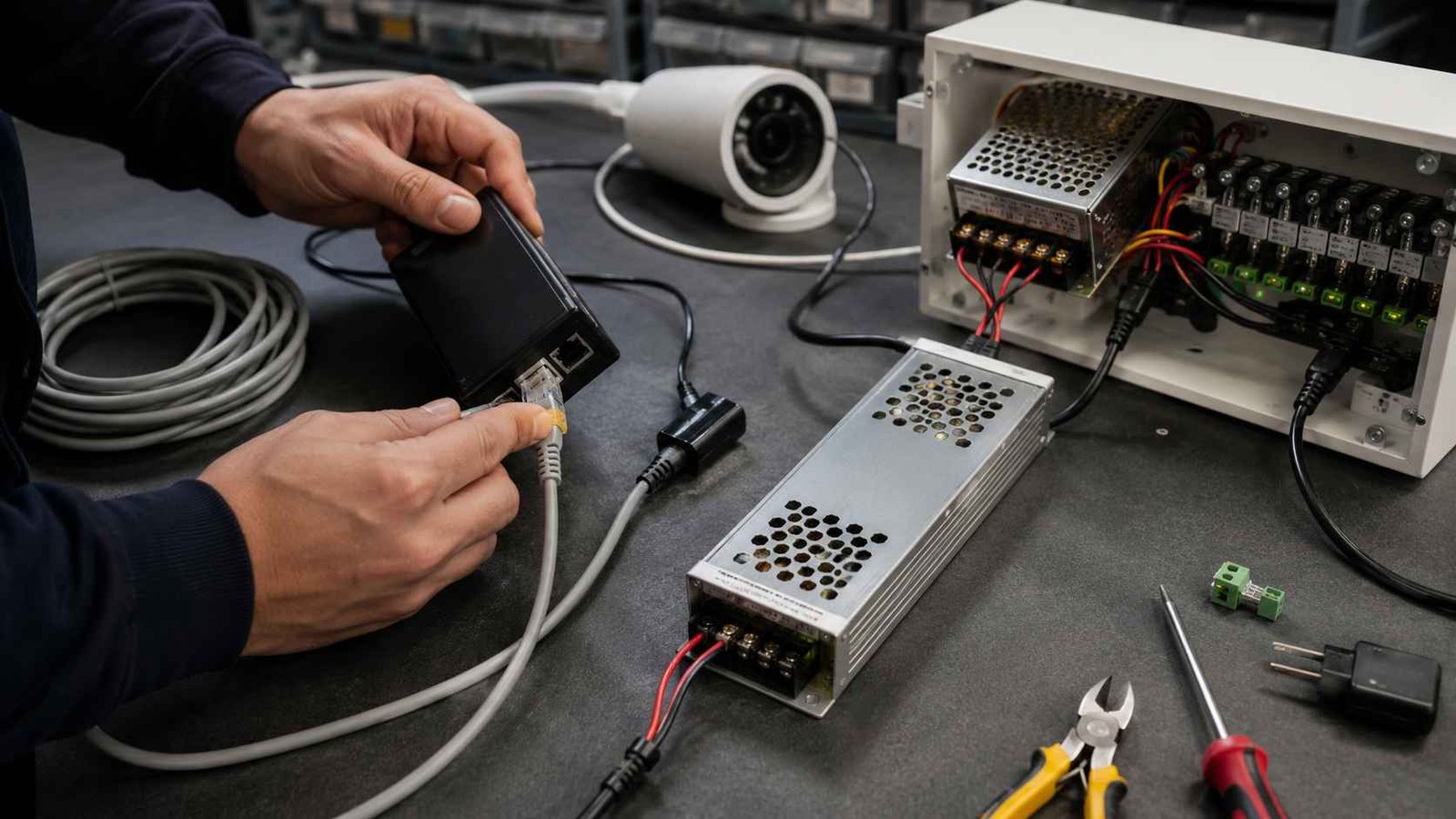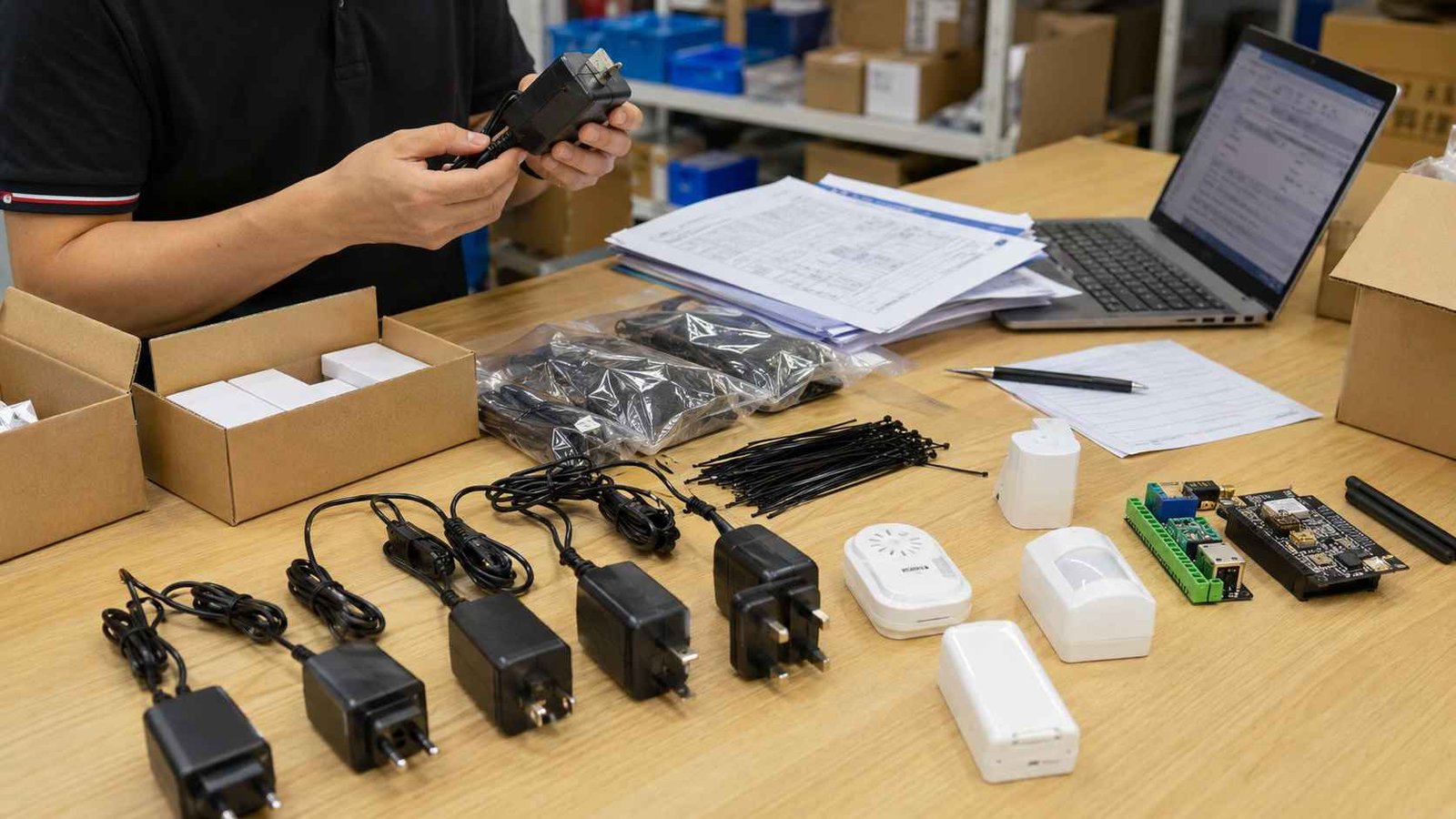


Low voltage EI core transformers are widely used in OEM electronic products, control boards, security devices, small appliances, audio equipment, power modules and low-frequency power conversion circuits. For buyers who need stable AC output, customized voltage, compact structure and batch consistency, the transformer should be selected according to the complete electrical and mechanical specification, not only by input and output voltage.
Macable manufactures low voltage EI core transformers for OEM electronics and custom device projects. Available options may include different input voltages, secondary output voltages, VA ratings, mounting structures, lead wire types, terminal configurations and insulation requirements according to the final application.
Unlike a current transformer used for current measurement, an EI core transformer is mainly used for voltage transformation and isolated low-voltage power supply. For this reason, buyers should confirm the real application before choosing the transformer model, especially when the transformer will be installed inside a finished device or control system.

Table of Contents
- 1. What Is a Low Voltage EI Core Transformer?
- 2. Common OEM Electronics Applications
- 3. Input and Output Voltage Selection
- 4. VA Rating, Load Current and Power Margin
- 5. Mounting Structure, Size and Wiring Options
- 6. Temperature Rise, Insulation and Safety Checks
- 7. How to Compare Low Voltage Transformer Models
- 8. Custom EI Core Transformer Options
- 9. Quality Control for OEM Transformer Orders
- 10. Information Needed Before Requesting a Quote
- 11. FAQ
1. What Is a Low Voltage EI Core Transformer?
A low voltage EI core transformer is a low-frequency electromagnetic transformer built with laminated silicon steel cores and copper or copper-clad windings. The EI core structure is named after the shape of the laminated core pieces. It is commonly used to step down AC mains voltage or provide isolated low-voltage AC output for electronic circuits.
Compared with a switching power supply, an EI core transformer has a simple structure, strong electrical isolation, stable low-frequency performance and good suitability for certain control, audio, appliance and security applications. It is often selected when the device design requires AC output, isolation, low electromagnetic complexity or compatibility with traditional transformer-based circuits.
For OEM buyers, the transformer must match the circuit design, load condition, available installation space and target market requirements. A transformer with the correct output voltage but poor size fit, insufficient VA rating or unsuitable insulation design may still fail during sample testing.
2. Common OEM Electronics Applications
Low voltage EI core transformers are used in many small and medium electronic devices where stable low-voltage AC conversion is required. Typical applications include:
- Control boards for appliances and equipment
- Security devices and access control equipment
- Doorbell systems and low-voltage signal circuits
- Audio equipment and low-frequency circuits
- Small household appliances
- HVAC control modules
- Industrial control panels and auxiliary circuits
- Custom electronic products requiring isolated AC output
For applications that require regulated DC output, a power adapter or switching power supply may be more suitable. For applications that require transformer-based AC output, isolation and customized winding design, an EI core transformer remains a practical choice.
3. Input and Output Voltage Selection
The input voltage should match the destination market and final equipment design. Common input options include 110V, 120V, 220V, 230V and 240V AC. For export electronics, buyers should confirm whether the device is designed for a single market or multiple regions.
The output voltage depends on the circuit requirement. Low voltage EI core transformers may be designed for 6V, 9V, 12V, 15V, 18V, 24V or customized AC output. Some applications require single secondary output, while others may require dual secondary winding or special voltage combinations.
| Selection Item | What to Confirm | Why It Matters |
|---|---|---|
| Primary input | 110V, 120V, 220V, 230V or 240V AC | Must match the destination power grid |
| Frequency | 50Hz, 60Hz or 50/60Hz design | Affects transformer design and temperature rise |
| Secondary output | 6V, 9V, 12V, 15V, 18V, 24V or custom AC output | Must match the device circuit |
| Output type | Single output or dual output | Important for control boards and audio circuits |
| Load condition | Continuous load, intermittent load or peak load | Affects VA rating and thermal performance |
4. VA Rating, Load Current and Power Margin
Transformer capacity is usually expressed in VA rather than watts. VA is calculated from output voltage and output current. For example, a 12V AC transformer with 1A output capacity is approximately 12VA. However, the final selection should also consider load type, operating time, temperature rise and safety margin.
A transformer should not be selected too close to the maximum load if the device runs continuously or operates in a warm enclosure. In OEM electronics, insufficient VA rating can lead to excessive temperature rise, voltage drop, humming noise, shorter service life or unstable circuit performance.
| Example Output | Approximate Capacity | Typical Use |
|---|---|---|
| 6V AC / 0.5A | 3VA | Small signal circuits and low-power modules |
| 12V AC / 1A | 12VA | Control boards, small devices and security circuits |
| 18V AC / 1A | 18VA | Audio, control or custom electronic circuits |
| 24V AC / 1.5A | 36VA | Auxiliary control circuits and higher-load applications |
When the load is not purely resistive, or when the device has startup current, the transformer should be tested under real working conditions before bulk approval.
5. Mounting Structure, Size and Wiring Options
For OEM electronics, mechanical fit is as important as electrical performance. A transformer must fit the device enclosure, PCB layout or mounting bracket. Buyers should confirm the transformer size, mounting hole distance, lead wire length, terminal type and insulation sleeve requirements before sample production.
Common structure options include:
- PCB-mounted EI core transformer
- Lead-wire transformer for internal device wiring
- Terminal-type transformer for easier assembly
- Bracket-mounted transformer for equipment installation
- Encapsulated or covered design for specific protection needs
The transformer should also be checked against the final assembly process. If the product is assembled on a production line, wiring direction, lead length, connector type and fixing method can affect assembly speed and batch consistency.
6. Temperature Rise, Insulation and Safety Checks
Temperature rise is one of the key indicators of transformer reliability. A transformer may pass a short functional test but still become too hot during continuous operation. The final device enclosure, ventilation condition and nearby heat-generating components should be considered during sample testing.
Important safety and reliability items include:
| Item | What to Check | Why It Matters |
|---|---|---|
| Insulation class | Insulation material and temperature rating | Affects long-term safety and service life |
| Dielectric strength | Hi-pot test between primary and secondary | Confirms electrical isolation |
| Temperature rise | Full-load thermal behavior | Prevents overheating in enclosed devices |
| No-load current | Current draw without load | Affects efficiency and standby behavior |
| Noise and vibration | Mechanical hum under operating conditions | Important for indoor devices and audio equipment |
Certification requirements such as CE, UL, EN standards, RoHS documentation, insulation class and dielectric strength can be confirmed according to the target market and project specification. It is better to verify the required standard for each model and application rather than making a broad claim across all transformer types.
7. How to Compare Low Voltage Transformer Models
When comparing EI core transformer models, buyers should not rely on size or output voltage alone. A smaller transformer may save space but may have limited VA capacity or higher temperature rise. A larger transformer may improve thermal margin but may not fit the final enclosure.
The comparison should include:
- Input voltage and frequency
- Secondary output voltage and current
- VA rating
- Core size and overall dimensions
- Mounting method and fixing hole distance
- Lead wire or terminal type
- Temperature rise under full load
- Insulation and hi-pot test requirements
- Noise level and vibration behavior
- Certification and documentation requirements
For example, a 12V AC transformer used in a doorbell or small security circuit may have different design priorities from a transformer used in audio equipment. The former may focus on compact size and stable output under intermittent use, while the latter may require lower noise, better winding consistency and reduced mechanical hum.
8. Custom EI Core Transformer Options
OEM electronics often require customized transformer specifications. The input voltage, secondary output, VA rating, core size, winding design, lead wire, terminal and mounting structure can be adjusted according to the product design.
Common custom requirements include:
- Custom primary input voltage for specific export markets
- Custom secondary voltage and current
- Single or dual secondary output
- PCB pin layout adjustment
- Lead wire length and color customization
- Terminal or connector configuration
- Mounting bracket or screw hole adjustment
- Insulation tape, sleeve or protective cover design
- Private label, model number and packaging requirement
For customized projects, transformer samples should be tested inside the final device or prototype assembly. Bench testing alone may not reveal heat buildup, noise, fit or wiring issues that appear in the finished product.
9. Quality Control for OEM Transformer Orders
For batch orders, transformer consistency is important. A transformer used in OEM electronics must maintain stable electrical performance and mechanical fit across production batches. Quality control should cover incoming material, winding process, insulation treatment, electrical testing and final inspection.
Typical inspection items include:
- Input and output voltage test
- No-load current test
- Load voltage test
- Hi-pot test
- Insulation resistance test
- Winding continuity test
- Temperature rise test when required
- Appearance and dimension inspection
- Lead wire, terminal and label verification
For long-term OEM supply, buyers should confirm the approved sample, drawing, material specification and test standard before mass production. This helps reduce batch variation and avoids changes that affect the final device assembly.
10. Information Needed Before Requesting a Quote
A clear specification helps the supplier recommend the correct transformer model and reduces repeated sample changes. Before requesting a quotation, prepare the following information:
| Information to Provide | Example Details |
|---|---|
| Application | Control board, security device, appliance, audio equipment or custom electronics |
| Input voltage | 110V, 120V, 220V, 230V, 240V AC or custom input |
| Frequency | 50Hz, 60Hz or 50/60Hz |
| Output voltage | 6V, 9V, 12V, 15V, 18V, 24V AC or custom output |
| Output current / VA | Required load current and expected VA rating |
| Mounting method | PCB mount, lead wire, terminal, bracket or enclosed structure |
| Size limitation | Maximum length, width, height and mounting hole distance |
| Safety requirement | Insulation class, hi-pot test, CE, UL, EN or RoHS requirement |
| Order information | Sample quantity, annual quantity, packaging and OEM/ODM needs |
Conclusion
A low voltage EI core transformer should be selected according to the full electrical, mechanical and safety requirements of the final device. Input voltage, frequency, output voltage, VA rating, temperature rise, insulation, mounting structure, wiring method and certification requirements all affect whether the transformer can be used reliably in OEM electronics.
For control boards, security devices, appliance circuits, audio equipment and custom electronic products, early confirmation of drawings and samples can reduce production delays and improve batch consistency. Buyers should provide application details, input and output requirements, load current, size limits, mounting method and target market requirements before sample development.
Macable manufactures low voltage EI core transformers for OEM electronics and custom device projects, with support for different voltage outputs, VA ratings, mounting structures, lead wire options, terminal configurations and project-based specifications. Buyers can send electrical parameters, drawings or reference samples for model recommendation and OEM/ODM quotation.
11. FAQ
Is a low voltage EI core transformer the same as a current transformer?
No. A current transformer is mainly used for current measurement or protection circuits. A low voltage EI core transformer is usually used for voltage transformation and isolated low-voltage power supply in electronic devices.
How do I choose the VA rating of a transformer?
The VA rating should be selected according to output voltage, load current, operating time and temperature rise. The transformer should have enough margin for continuous operation and real load conditions.
What output voltages are common for low voltage transformers?
Common outputs include 6V, 9V, 12V, 15V, 18V and 24V AC. Custom secondary voltages can also be designed according to the device circuit requirement.
Why is temperature rise important?
Excessive temperature rise can shorten transformer life, affect insulation safety and cause failure inside enclosed devices. Full-load thermal testing is important before sample approval.
Can EI core transformers be customized?
Yes. Input voltage, output voltage, VA rating, winding design, core size, mounting structure, lead wire, terminal type and insulation design can be customized according to the project specification.