

An AC power adapter converts AC power from a wall outlet into the low-voltage output required by an electronic device. Most adapters used for routers, LED products, smart devices, security equipment, scanners, control boards and small medical or industrial devices are AC/DC power adapters, because they take AC input and deliver DC output.
The adapter may look like a simple accessory, but it is part of the product’s electrical safety and reliability. A wrong adapter can cause startup failure, overheating, unstable operation, battery charging problems, connector damage or product returns. For OEM buyers, the correct adapter is not only about voltage. It also involves current, wattage, plug type, connector size, polarity, cable length, certification, label and packaging.
This article explains what an AC power adapter does, how AC/DC output works, how to read adapter ratings, and how buyers should choose the right power adapter for export electronics and OEM projects.
Quick Answer: What Is an AC Power Adapter?
An AC power adapter is an external power supply that receives AC mains power and converts it into the output needed by a device. In most electronics, the output is DC power, such as 5V DC, 9V DC, 12V DC, 24V DC or another specified rating.
For example, a 12V router cannot be connected directly to a 120V or 230V wall outlet. It needs a power adapter to convert the wall power into stable 12V DC output.
Simple rule: the wall outlet provides AC input. The device usually needs DC output. The AC power adapter sits between them and makes the power usable for the device.
AC Input and DC Output: What Do They Mean?
Most countries supply AC power through wall outlets. Electronic devices, however, usually operate on low-voltage DC power. That is why the adapter label usually shows two important ratings: Input and Output.
| Label Item | Example | Meaning |
|---|---|---|
| Input | 100–240V AC, 50/60Hz | The adapter can accept mains power from many countries. |
| Output | 12V DC, 2A | The adapter supplies 12V DC and can provide up to 2 amps. |
| Power | 24W | The maximum output power, calculated by voltage multiplied by current. |
A common example is a 12V 2A AC/DC adapter. It may accept 100–240V AC input from the wall, then deliver 12V DC output to the device. The device does not receive the wall voltage directly. It receives the controlled DC output from the adapter.
AC Power Adapter vs DC Power Adapter
People often search for “AC power adapter,” “DC power adapter,” and “AC/DC adapter.” In many product discussions, they are describing the same external adapter from different angles.
| Term | What Buyers Usually Mean | Important Point |
|---|---|---|
| AC Power Adapter | An adapter that plugs into an AC wall outlet. | Focuses on the input side. |
| DC Power Adapter | An adapter that provides DC output to the device. | Focuses on the output side. |
| AC/DC Power Adapter | An adapter that converts AC input into DC output. | The most accurate term for most external adapters. |
If a device label says “DC 12V,” it does not mean the wall outlet should provide DC power. It usually means the device needs a power adapter that converts AC mains power into 12V DC output.
What Does an AC Power Adapter Do?
An AC power adapter performs several important functions at the same time.
- Power conversion: it changes AC mains power into the DC output required by the device.
- Voltage reduction: it reduces high wall voltage to a lower device voltage, such as 5V, 12V or 24V.
- Output regulation: it keeps the output voltage within the required range under normal load.
- Current supply: it provides enough current for the device’s operating load.
- Electrical protection: depending on the design, it may include short-circuit, overload, over-voltage and over-temperature protection.
- Market matching: it can be configured with the correct plug, label and documentation for different countries.
This is why two adapters that look almost identical may not be interchangeable. The housing shape is not the specification. The adapter label, connector and test result matter more.
How to Read Power Adapter Ratings
The label is the first thing to check before replacing, approving or ordering a power adapter. A proper selection starts with these ratings.
1. Input Voltage
Input voltage tells you what wall power the adapter can accept. For export products, 100–240V AC, 50/60Hz input is usually preferred because it can support both 100–120V markets and 220–240V markets.
If an adapter is marked 120V only, it should not be used directly in 230V countries. If it is marked 220–240V only, it may not work correctly in 100–120V markets.
2. Output Voltage
Output voltage must match the device requirement. This is one of the strictest rules in adapter selection.
- A 5V device should use a 5V adapter.
- A 12V device should use a 12V adapter.
- A 24V device should use a 24V adapter.
Using a higher voltage adapter can damage the device. Using a lower voltage adapter may cause the device to fail, restart or operate unstably.
3. Output Current
Current is the amount of electrical flow the adapter can provide. The adapter should provide at least the current required by the device, preferably with reasonable margin.
For example, if a device requires 12V 1A, a 12V 2A adapter may be acceptable if the connector and polarity are correct. The device normally draws only the current it needs. But a 5V 2A adapter cannot replace a 12V 1A adapter because the voltage is different.
4. Wattage
Wattage is output voltage multiplied by output current.
| Adapter Rating | Maximum Output Power | Typical Use |
|---|---|---|
| 5V 2A | 10W | Small electronics, IoT devices, smart hubs, sensors. |
| 9V 2A | 18W | Charging products and some electronic devices. |
| 12V 1A | 12W | Routers, control boards, small monitors. |
| 12V 2A | 24W | Security devices, network equipment, LED products. |
| 24V 1.5A | 36W | Industrial controls, access systems, LED or equipment applications. |
For OEM projects, the wattage should not be selected too close to the device’s maximum load. Startup current, wireless transmission, LED activation, motor movement and peak load can all increase demand.
Switching Power Adapter vs Linear Power Adapter
Most modern AC/DC power adapters are switching power adapters. A switching adapter uses high-frequency switching circuits to convert power more efficiently than older linear designs. This makes it possible to build adapters that are smaller, lighter and suitable for wide input voltage.
| Type | Strengths | What Buyers Should Check |
|---|---|---|
| Switching Power Adapter | Compact size, lighter weight, better efficiency, wide input options. | Ripple, noise, EMC performance, heat and protection design. |
| Linear Power Adapter | Simple design and low noise in some legacy applications. | Heavier size, lower efficiency and limited use in many modern products. |
For routers, smart devices, chargers, LED products, IoT equipment, access control systems and many industrial devices, switching adapters are usually the practical choice. However, buyers should not judge the adapter only by output voltage. A good switching adapter also needs stable output, controlled ripple, proper insulation, heat management, safety protection and EMC performance.
Can I Use a Power Adapter with Higher Amps?
In many cases, yes. You can often use an adapter with a higher current rating if the output voltage is the same, the connector fits correctly, and the polarity matches.
For example, a 12V 2A adapter may be used for a device that requires 12V 1A if all other specifications match. The device will draw the current it needs. The adapter’s current rating is its available capacity, not the amount forced into the device.
But this rule has limits. Check the following before approving the adapter:
- the output voltage must be the same;
- the current rating should be equal to or higher than the device requirement;
- the connector size must match;
- the polarity must match;
- the cable must support the required current;
- the adapter should pass real load testing with the device;
- the adapter should meet target market safety and efficiency requirements.
A higher current rating can be acceptable. A higher voltage rating is not automatically safe.
What Is a 5V 2A Power Adapter?
A 5V 2A power adapter provides 5 volts DC output and can supply up to 2 amps of current. Its maximum output power is 10W.
This rating is common for small electronics, including:
- smart home devices;
- IoT gateways;
- Wi-Fi routers and accessories;
- mini cameras;
- security sensors;
- POS accessories;
- USB-powered products;
- small control boards.
For products sold in different countries, buyers may choose a fixed plug version or an interchangeable plug version. A 5V 2A interchangeable plug power adapter can be useful when the same device needs US, EU, UK, AU or other plug options while keeping the same DC output.
What Is a 12V Power Adapter?

A 12V power adapter supplies 12 volts DC output. It is one of the most common adapter ratings for equipment and electronic devices.
Typical applications include:
- network routers and switches;
- security cameras and access control devices;
- LED lighting products;
- small monitors;
- audio devices;
- barcode scanners;
- control boards and instruments.
The current rating depends on the device load. A 12V 1A adapter provides up to 12W. A 12V 2A adapter provides up to 24W. A 12V 5A adapter provides up to 60W. The correct choice depends on actual load, cable length, startup demand, heat conditions and safety margin.
For LED applications, buyers should confirm whether the product requires a standard constant-voltage adapter or a more application-specific LED driver power supply. LED loads can have different startup, dimming and installation requirements from ordinary consumer electronics.
USB Power Adapter, USB-C PD Charger and AC/DC Adapter
A USB power adapter is a type of AC/DC adapter, but not every AC/DC adapter is a charger. The difference is in the output interface and charging protocol.
| Product Type | Output Type | Best Used For |
|---|---|---|
| AC/DC Power Adapter | Fixed DC output, such as 5V, 12V or 24V. | Routers, IoT devices, LED products, control equipment. |
| USB Power Adapter | USB-A or USB-C output. | USB-powered devices and charging accessories. |
| USB-C PD Charger | Negotiated Power Delivery output. | Phones, tablets, laptops and fast-charging devices. |
If the final device uses USB-C charging, buyers should confirm output power, PD protocol, cable compatibility and target device behavior. For charging applications, Macable’s charger and PD charger category is more relevant than a standard barrel-connector adapter.
Are Power Adapters Interchangeable?
Power adapters are interchangeable only when the key specifications match. The connector shape alone is not enough.
Before replacing or approving an adapter, confirm:
- same output voltage;
- equal or higher current capacity;
- suitable wattage margin;
- correct DC connector size;
- correct polarity;
- compatible AC input range;
- correct plug type for the target country;
- suitable cable length and wire gauge;
- required safety and efficiency documents.
A 12V adapter and a 5V adapter are not interchangeable. A center-positive connector and a center-negative connector are not interchangeable. Two adapters with the same voltage may still be unsuitable if the connector, cable, plug, polarity or certification is different.
Wall Plug Adapter, Interchangeable Plug Adapter or Desktop Adapter?
The adapter structure should match the device power level, country plug requirement and product packaging plan.
| Adapter Style | Structure | Best For |
|---|---|---|
| Wall Plug Adapter | The adapter body plugs directly into the wall outlet. | Small electronics, routers, sensors, smart devices and low-to-medium power products. |
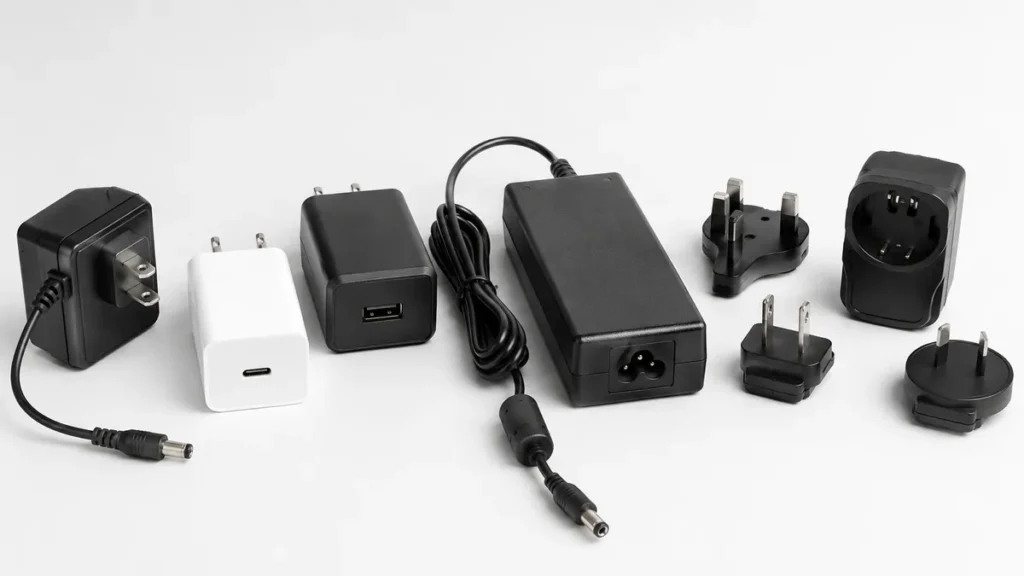
| Interchangeable Plug Adapter | The adapter body uses replaceable AC plug heads. | Multi-country export products, retail kits, sample programs and distributors. |
| Desktop Adapter | The adapter body connects to the wall through an AC power cord. | Higher-power devices, monitors, medical equipment, industrial controls and LED systems. |
For a single-country order, a fixed plug adapter may be simple and cost-effective. For a product sold in several countries, an interchangeable plug adapter may reduce SKU complexity. For higher-power or professional equipment, a desktop adapter with country-specific AC cords may be more practical.
Why Some Adapters Work in Samples but Fail in Real Use
One common OEM problem is that the adapter works during a short sample test but fails after mass production or customer use. This usually happens because the sample test did not reflect real operating conditions.
| Problem | Possible Cause | Buyer Action |
|---|---|---|
| Device restarts randomly | Current margin is too small or voltage drops under load. | Test with peak load and choose enough wattage margin. |
| Adapter becomes too hot | Adapter is operating near maximum load for long periods. | Review load, ambient temperature, housing and power margin. |
| Device does not power on | Wrong voltage, wrong polarity or connector contact issue. | Confirm output, polarity and connector dimensions. |
| Noise appears in device operation | Ripple, grounding or EMC issue. | Test the adapter with the real device, not only a resistive load. |
| High return rate in one country | Wrong plug, label, certification or local voltage assumption. | Confirm target market requirements before shipment. |
For professional projects, buyers should test the adapter with the real device under normal load, peak load, long operating time and expected ambient temperature. A correct adapter is not only one that powers on the device for a few minutes.
What OEM Buyers Should Confirm Before Selecting an AC Power Adapter

For OEM and ODM projects, the adapter should be selected during product development, not after the product is already finished. Adapter changes can affect housing, cable routing, label layout, packaging, documentation and certification schedule.
1. Device Application
The adapter for a router is not the same as the adapter for a PoE camera, LED strip, medical device, access control panel or industrial controller. Application affects load behavior, protection design, heat, EMC and reliability testing.
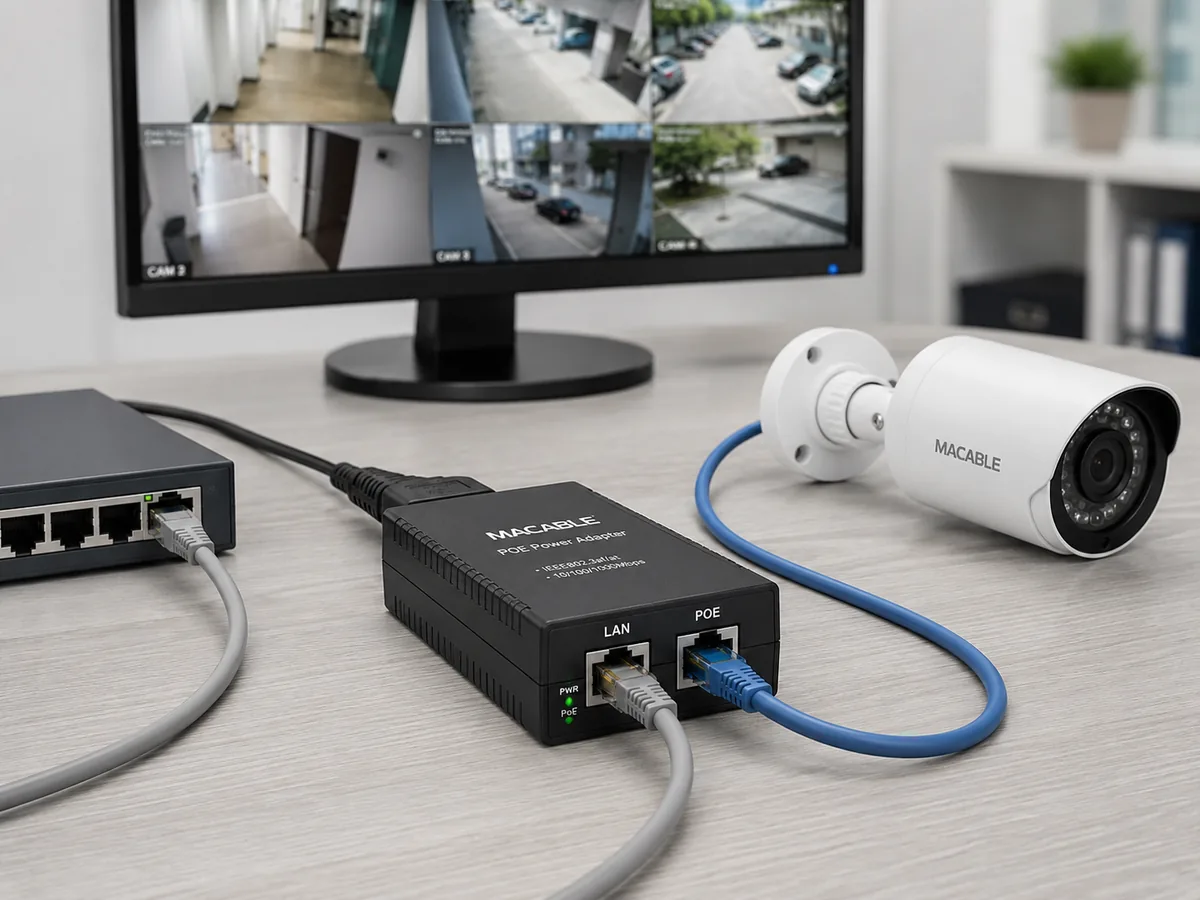
For network and security projects, a PoE power adapter or PoE injector may be more suitable than a standard barrel-plug adapter. For industrial equipment, long operating time and stable batch quality may be more important than the lowest unit cost.
2. Output Voltage and Current
Confirm the required DC output voltage first. Then calculate the current and wattage margin based on real device load. If the device has motors, wireless modules, LED loads or high startup demand, avoid selecting an adapter with no margin.
3. AC Input and Target Countries
For global sales, wide input such as 100–240V AC, 50/60Hz is usually preferred. However, the plug type, label, certification and packaging may still need to change by market.
4. Connector, Polarity and Cable
For barrel connectors, confirm outer diameter, inner diameter, polarity and insertion fit. For fixed cables, confirm cable length, wire gauge, jacket material and strain relief. For USB output, confirm whether USB-A, USB-C or USB-C PD is required.
5. Plug Type and Adapter Structure
US, EU, UK, AU, China, Japan and Korea plug versions may require different designs. If one product is sold globally, decide whether fixed plugs, interchangeable plugs or desktop adapters with country-specific AC cords are the better solution.
6. Safety, EMC and Energy Efficiency
External power supplies may need safety, EMC and energy-efficiency review depending on the target market and product type. These requirements should be checked early because they may affect component selection, label content, test reports and production schedule.
7. Label, Packaging and Documentation
OEM buyers should confirm model number, input/output rating, certification marks, warning text, importer information, barcode, language, packaging style and user manual content before mass production. These details should be part of the adapter specification, not left until the final packaging stage.
Standard Adapter or Custom OEM Adapter?
A standard adapter is suitable when the device matches an existing output, connector and plug configuration. A custom OEM adapter is better when the buyer needs a special cable, plug, label, housing, package or certification plan.
| Option | Best For | Typical Requirement |
|---|---|---|
| Standard Power Adapter | Common electronics and fast sample approval. | Existing voltage, current, plug and connector options. |
| Custom OEM Adapter | Brand projects and export products. | Custom cable, plug, label, housing, packaging or documentation. |
| Application-Specific Power Supply | LED, PoE, industrial, medical or equipment projects. | Power solution based on load behavior, installation and market requirements. |
If the adapter will be packed with the buyer’s product, sold under the buyer’s brand or supplied to several countries, OEM customization is often worth discussing before production.
AC Power Adapter Selection Checklist
Before ordering an AC/DC power adapter, prepare the following information for your supplier:
- device type and application environment;
- required DC output voltage;
- required current and power margin;
- AC input range and target countries;
- fixed plug, interchangeable plug or desktop adapter preference;
- DC connector size and polarity;
- cable length, wire gauge and cable type;
- housing size, color and branding requirements;
- safety, EMC and efficiency requirements;
- label, packaging and documentation requirements;
- sample testing conditions before bulk production.
Final Recommendation
An AC power adapter is more than a small accessory. It controls how power enters the device, how stable the device operates and how safely the product can be used in the target market.
For replacement use, check the adapter label carefully. Voltage must match, current must be enough, connector size must fit and polarity must be correct. For OEM and export projects, prepare a complete specification before sample approval, including output rating, plug type, cable, label, certification and packaging.
Macable supplies AC/DC power adapters, USB power adapters, USB-C PD chargers, LED driver power supplies, PoE power adapters and industrial power supply products for OEM and ODM projects. Buyers can send output voltage, current, target country, plug type, connector, cable length, label and packaging requirements for model selection or custom production discussion.
FAQ
What is an AC power adapter?
An AC power adapter is an external power supply that converts AC power from a wall outlet into the output required by an electronic device. Most adapters for small electronics convert AC input into low-voltage DC output.
What is the difference between an AC adapter and a DC adapter?
An AC adapter usually refers to the adapter’s input from the wall outlet. A DC adapter usually refers to the DC output delivered to the device. In most electronics, the correct term is AC/DC power adapter because it converts AC input into DC output.
How do I choose the right voltage and current for a power adapter?
Match the output voltage exactly to the device requirement. Choose a current rating that is equal to or higher than the device requirement, with enough margin for startup and peak load. Also confirm connector size, polarity and cable length.
Can I use a power adapter with higher amps?
In many cases, yes, if the voltage is the same, the connector fits, the polarity is correct and the adapter meets the device requirements. The device normally draws only the current it needs. A higher voltage adapter should not be used unless the device specification allows it.
Are AC power adapters interchangeable?
Only when the key specifications match. Voltage, current capacity, connector size, polarity, plug type, input range, cable and safety requirements all need to be checked before one adapter replaces another.