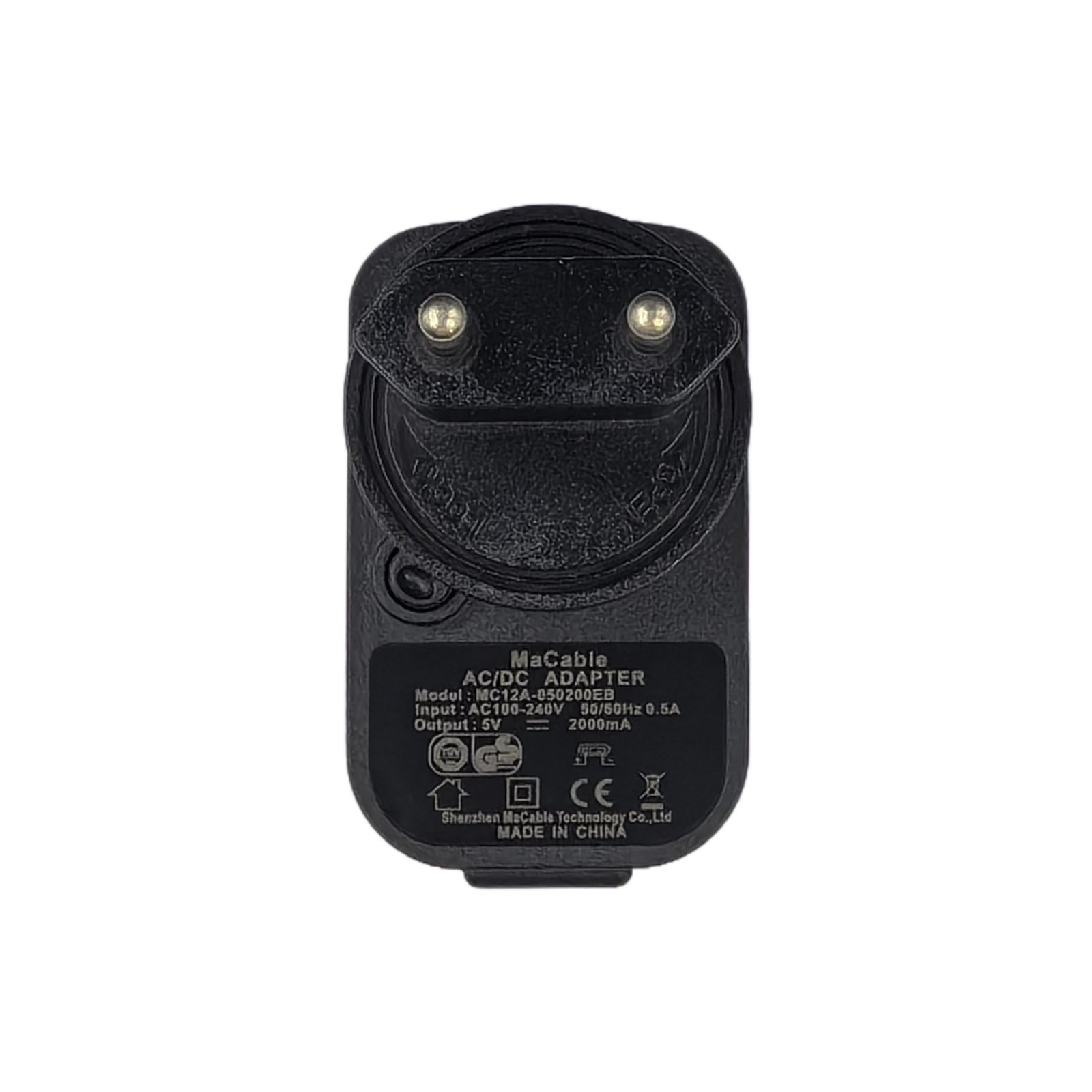


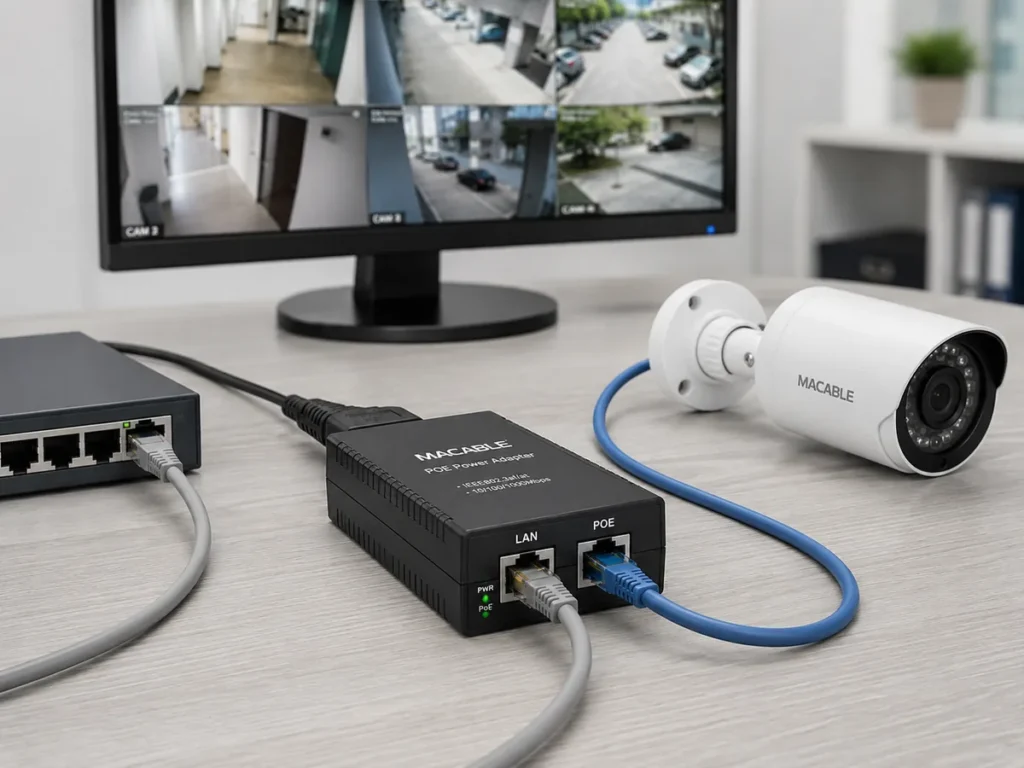
PoE Power Adapter Solution for IP Camera Projects: Stable 48V Power Supply for Security Installations
In security installation projects, cameras, NVRs, access control terminals and network devices usually receive most of the attention. But after installation, many operation problems are actually related to the power supply. Unstable output may cause camera disconnection, device restart, weak transmission, or repeated site maintenance.
In this project, we supported a security equipment distributor with a stable 48V PoE power adapter solution for IP cameras and wireless bridge applications. The customer wanted to replace several mixed adapter models with one more stable power supply solution that could support long working hours, match different export markets and remain consistent in repeat bulk orders.
The request looked simple at first: a 48V PoE adapter for network security devices. But after checking the customer’s application, cable distance, device load, plug type and packaging plan, we found that the project needed careful specification matching before sample production.
Project Background
The customer had been buying power adapters from different suppliers for different security devices. During short bench testing, most adapters appeared to work. Problems usually appeared later, after installation.
Some cameras restarted after several hours of operation. Some adapters became too warm when used continuously. In a few projects, similar-looking adapters caused confusion in the warehouse because the output rating, cable length, plug type or label information was not consistent.
For an installer, replacing one adapter is not only the cost of the product. It may also mean checking the camera, cable, PoE connection, NVR, network device and site wiring again. The customer wanted to reduce this kind of after-sales work by standardizing the power supply from the beginning.
For this type of security project, we first confirmed whether the devices needed a standard PoE power adapter, a passive PoE solution, or a customized output design based on actual device load and cable distance.
Customer Requirements
Before preparing samples, we confirmed the main project requirements with the customer.
| Item | Requirement |
|---|---|
| Application | IP cameras and wireless bridge devices |
| Output | Stable 48V DC |
| Input | 100–240V AC for export markets |
| Power Use | Continuous operation after installation |
| PoE Matching | Confirm standard PoE or passive PoE requirement |
| Plug Type | Different plug options for different markets |
| Customization | Label, cable and packaging confirmation |
| First Step | Sample testing with real devices |
| Long-Term Plan | Repeat bulk orders after approval |
The customer did not want to select the adapter only by price. They cared more about stable output, heat performance, correct labeling and repeatable production quality.
Problems with the Previous Supply
The customer’s previous adapters created four main problems.
The first problem was heat during continuous operation. Security devices often run day and night, so a short power-on test is not enough. If the adapter becomes too hot after long working hours, the risk of failure and customer complaints increases.
The second problem was unstable output. Some cameras worked during initial testing, but restarted after longer operation. This was usually linked to device load, cable distance, poor power margin, or inconsistent adapter performance.
The third problem was model confusion. The customer had several similar-looking adapters in stock, but the actual output, plug type, cable length and labels were not always the same. This made warehouse management difficult and increased the chance of sending the wrong adapter to a project site.
The fourth problem was market difference. The customer sold to more than one region, so plug type, input range, label content and packaging style had to be confirmed before bulk production.
These problems are common in security power supply sourcing. A PoE adapter may look like a simple product, but small details can affect installation stability.
Our Solution
After checking the customer’s device information and application conditions, we recommended a 48V PoE adapter platform suitable for IP camera and wireless bridge use.
We did not simply increase the rated power. First, we reviewed the camera load, cable distance, expected working time and target market. Then we prepared samples based on the confirmed electrical and commercial requirements.
1. PoE Compatibility Check
PoE matching was the first point we checked.
Some devices need standard PoE. Some use passive PoE. Some require higher power capacity or Gigabit data support. If the PoE type is wrong, the device may not start, may work unstably, or may create compatibility risks during installation.
Before sample production, we checked the customer’s device requirements and confirmed the adapter type according to actual application. For security equipment buyers, this step is similar to selecting a suitable power supply for CCTV and security devices: the output, load, installation environment and plug standard all need to match the final use.
2. Stable 48V Output Selection
The customer needed a 48V DC output for IP camera and wireless bridge applications. The key was not only voltage, but also stable performance under working load.
We selected a 48V platform with enough power margin for the customer’s devices. This helped reduce the risk of voltage drop, restart, or unstable operation after installation.
For security projects, using a barely sufficient adapter may pass short testing but fail during continuous use. We prefer to confirm the working load and leave a reasonable margin instead of selecting the lowest-cost model only by rated output.
3. Input Range and Export Market Matching
The customer served different markets, so the adapter needed wide AC input. A 100–240V AC input range made the model more suitable for export orders and easier for the customer to manage across different regions.
Plug type was also confirmed before sample production. This avoided a common problem: the electrical specification is approved, but the sample cannot be used directly in the target market because the plug, label or packaging is not correct.
4. Protection and Reliability Requirements
For this project, the adapter needed basic protection functions such as over-voltage protection, over-current protection and short-circuit protection.
These functions are important for security devices because installations are not always used in ideal conditions. Cable distance, site wiring, device startup load and long working hours can all place pressure on the power supply.
We also checked the housing, cable connection and label information before sending samples. The customer wanted a product that could be managed easily in stock and recognized quickly by installers.
5. Label and Packaging Plan
At the sample stage, the customer chose neutral packaging. This allowed them to test the model quickly without waiting for full private-label artwork.
After the model was approved, the customer planned to use private-label packaging for repeat orders. For many distributors, this is a practical route: confirm the electrical performance first, then improve brand packaging after market testing.
When a buyer is deciding between a standard model and a customized OEM version, the decision usually depends on plug type, label control, packaging plan, certification requirement and expected order quantity. We discuss this type of sourcing decision in our article about standard power adapters and custom OEM adapters.
Sample Testing
After the sample specification was confirmed, we prepared units for real-device testing.
The customer tested the adapters with IP cameras and wireless bridge devices instead of checking only the datasheet. This was important because power adapters often perform differently under real device load, especially during long working hours.
The sample test focused on:
| Test Point | What We Checked |
|---|---|
| Device startup | Whether cameras and wireless bridges started normally |
| Continuous operation | Whether the devices remained stable after long working time |
| Output stability | Whether the adapter maintained stable 48V output under load |
| Heat condition | Whether the adapter temperature stayed within acceptable range |
| Cable and connector | Whether the connection matched the installation requirement |
| Label accuracy | Whether voltage, model and market information were clear |
| Packaging | Whether the first batch could be managed easily in stock |
The customer also compared the samples with their previous adapters. The new solution was easier to identify, more consistent in labeling, and more suitable for repeat use across similar security projects.
Quality Control Before Bulk Production
After sample approval, we checked the bulk production requirements again before confirming the order.
For this type of project, bulk quality consistency is as important as sample approval. A good sample has little value if later batches cannot keep the same output, label, cable, plug and packaging standard.
Before shipment, the production batch went through basic inspection and testing.
| QC Item | Purpose |
|---|---|
| Input test | Confirm wide input performance |
| Output test | Verify 48V DC output |
| Load test | Check working stability under rated load |
| Aging test | Observe continuous operation reliability |
| Temperature check | Confirm heat performance during operation |
| Protection check | Verify basic safety protection |
| Visual inspection | Check housing, cable, plug and label |
| Packaging inspection | Confirm carton, label and packing consistency |
The customer paid special attention to aging test and temperature performance because their previous supply problems often appeared after longer working time, not during the first few minutes of testing.
Final Result
The customer approved the sample after testing it with their IP camera and wireless bridge devices.
The first bulk order used neutral packaging with confirmed label information. This helped the customer start the project quickly while keeping private-label packaging for later repeat orders.
After delivery, the customer used the adapters in several small security installation projects. Standardizing the PoE power supply helped them reduce model confusion, simplify purchasing and improve installation consistency.
The project was not solved by one single feature. The result came from a series of practical checks: correct PoE matching, stable 48V output, enough power margin, suitable plug selection, clear labeling, sample testing and consistent bulk production.
What Security Equipment Buyers Can Learn from This Case
For IP camera, wireless bridge, access control and network security projects, power adapter selection should be confirmed before bulk purchasing.
Buyers should check these details before asking for a quotation:
- Standard PoE or passive PoE requirement
- Output voltage and power rating
- Device load and cable distance
- Power margin for continuous operation
- 100–240V AC input requirement
- Plug type for the target market
- Label and packaging requirements
- Certification or market compliance requirements
- Sample testing plan before bulk order
- Supplier ability to keep batch consistency
A cheaper adapter may reduce the first purchase cost, but an unstable power supply can increase installation work, replacement cost and customer complaints.
Working with a Power Adapter Manufacturer
For distributors, brand owners and project suppliers, direct communication with a power adapter manufacturer can make the sourcing process more accurate.
As a manufacturer, we can check the voltage, current, connector, cable, plug, label, packaging and testing requirements before production. This is especially useful when the buyer needs more than a ready-made model.
Many security and electronic device projects also use wall-mounted or desktop power adapters for routers, smart home devices, LED products, access control terminals and other low-voltage equipment. Managing these products under one supplier can make repeat purchasing and model control easier.
Conclusion
A PoE power adapter is a small part of a security system, but it directly affects device stability, installation efficiency and after-sales cost.
In this IP camera project, we helped the customer confirm the PoE requirement, select a stable 48V output platform, prepare samples, complete real-device testing and support repeat bulk production.
For PoE power adapter sourcing, buyers can prepare the device model, output voltage, power rating, PoE type, plug standard, target market, label file, packaging requirement and estimated order quantity before sending an inquiry. With these details, we can check the specification faster and recommend a more suitable power supply solution.