

How to Choose the Right 5V Power Adapter for Wi-Fi Routers and Optical Network Terminal (ONT) Devices
For Wi-Fi routers and Optical Network Terminal (ONT) devices, the power adapter may look like a small accessory, but it plays a direct role in operating stability, field reliability, and after-sales performance. Many buyers focus only on “5V” and overlook output current, DC plug size, polarity, plug type, and certification needs. As a result, they may face compatibility issues, unstable startup, repeated rebooting, or even product returns in bulk projects.
If you are sourcing a 5V power adapter for networking equipment, there are several points that should be confirmed before quotation and mass production.
Start with the actual output requirement of the device
Although many routers and ONT devices use a 5V DC power adapter, the required output current can vary significantly. Common requirements include 5V 1A, 5V 1.5A, 5V 2A, and sometimes higher depending on the device design and connected load.
If the adapter cannot provide sufficient current, common problems may include:
- unstable startup
- weak or interrupted network performance
- repeated rebooting
- overheating during long-hour operation
- performance issues when more devices are connected
For this reason, buyers should not simply ask for “a 5V adapter.” It is better to confirm the rated output voltage, rated output current, and possible peak load demand. For routers and ONT devices that need to run continuously, it is usually safer to leave some current margin for long-term stability.
Confirm the DC plug size carefully
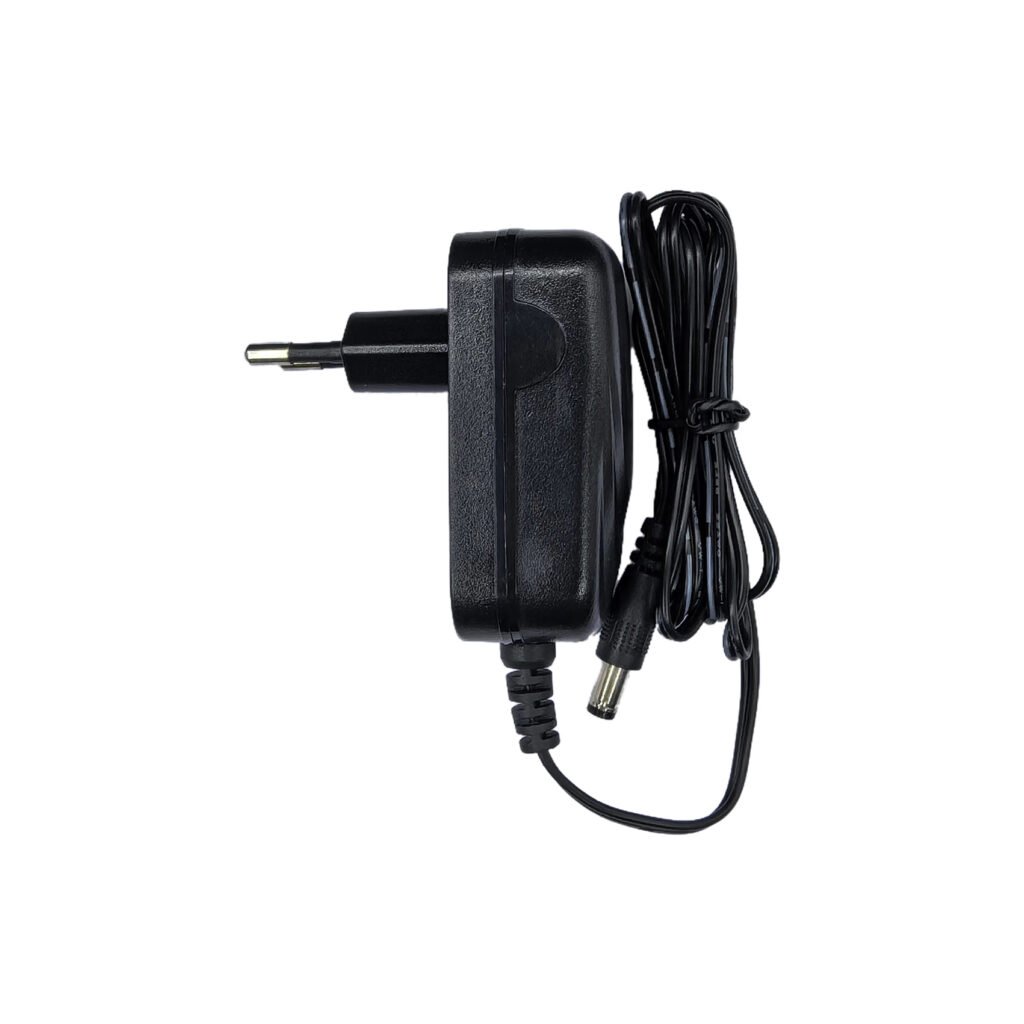
In many sourcing cases, compatibility issues are not caused by voltage at all, but by the DC connector size. Some DC plugs look similar, but their actual dimensions are different. Common specifications include:
- 5.5 × 2.1 mm
- 5.5 × 2.5 mm
- 3.5 × 1.35 mm
- 4.0 × 1.7 mm
If the DC plug does not match the device input port, it may not fit at all, or it may connect loosely and cause intermittent power failure. For bulk orders, buyers should ideally confirm the outer diameter, inner diameter, and connector structure before quotation. If exact dimensions are not available, a photo of the original adapter label or the device power port can still be very helpful.
Polarity must not be assumed
For networking equipment, polarity is another detail that is often overlooked. Many routers and ONT devices use center positive polarity, but it should never be assumed without checking.
Incorrect polarity may damage the device directly. Before placing an order, it is best to confirm polarity through the original adapter label, device marking, or technical documentation.
Match the AC plug type to the target market
If the equipment will be sold in different countries, the AC plug type should also be planned in advance. Common plug versions include:
- US plug
- EU plug
- UK plug
- AU plug
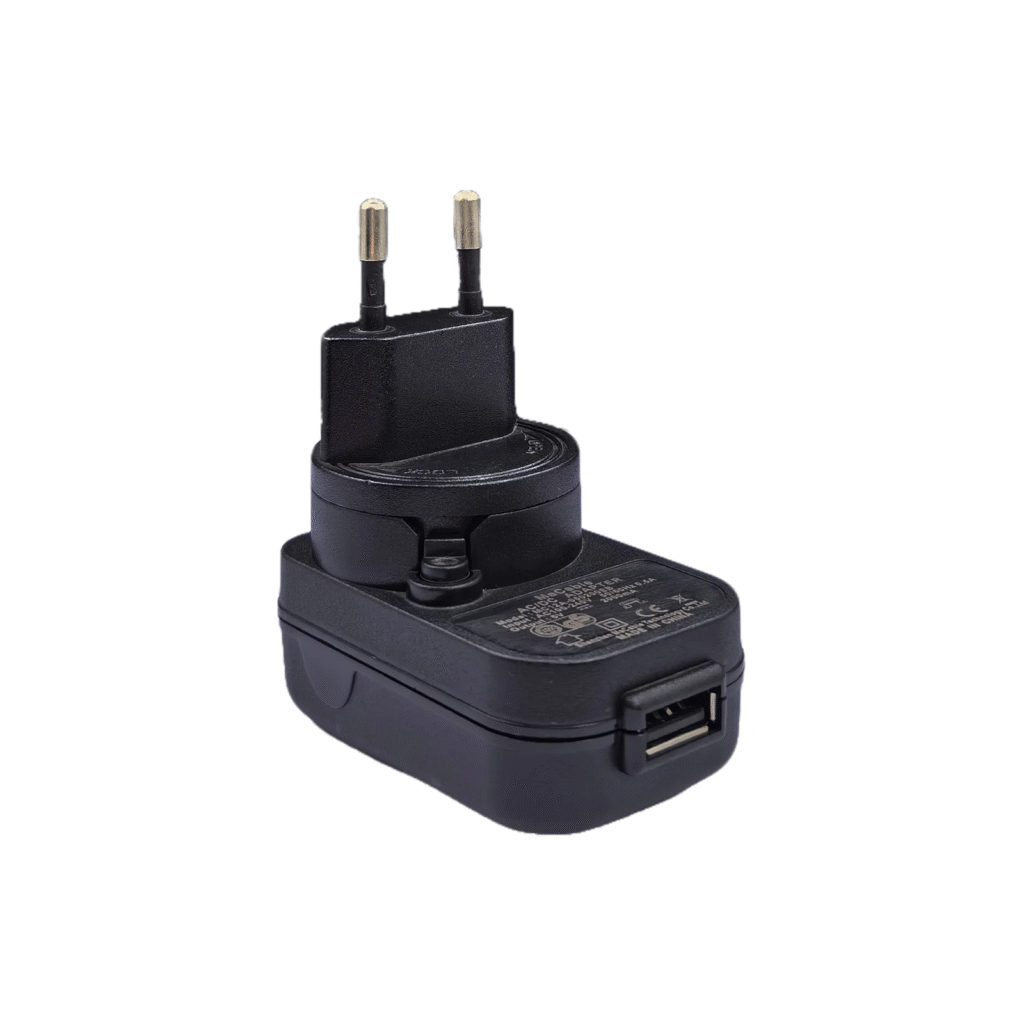
For projects covering multiple markets, an interchangeable plug power adapter can be a practical choice. It helps reduce SKU complexity and makes inventory management easier for importers and distributors serving more than one country.
Certification requirements should be clarified early
Routers and ONT devices are commonly used in telecom, smart home, and consumer electronics applications. Depending on the target market and sales channel, the power adapter may need to meet specific compliance requirements related to:
- safety
- EMC / EMI
- efficiency
- labeling and packaging compliance
If the project is intended for operator supply, retail chains, or branded OEM programs, it is much better to define the certification direction at the beginning instead of changing it shortly before shipment.
Cable length also affects installation convenience
Routers and ONT devices are often installed near walls, inside cabinets, in weak-current boxes, or on office desks. Different installation environments may require different cable lengths.
If the cable is too short, installation becomes inconvenient. If it is too long, packaging, transport efficiency, and cable management may all be affected. Common options include:
- 1.0 m
- 1.2 m
- 1.5 m
- customized length
If the project has a fixed installation structure, cable length should ideally be confirmed during the sample stage.
Do not compare suppliers by price alone
For router and ONT projects, a power adapter should not be judged only by whether it can power on the device. Buyers should also pay attention to:
- long-hour load stability
- thermal performance
- mechanical consistency
- insertion durability
- label and packaging quality
- batch-to-batch consistency
For long-term supply projects, stable production quality is often more important than the lowest initial quote.
Conclusion
When choosing a 5V power adapter for Wi-Fi routers and ONT devices, buyers should at least confirm the output specification, DC plug size, polarity, AC plug type, certification requirements, and cable length. The more clearly these points are defined, the smoother the quotation, sampling, and mass production process will be.
If you are sourcing adapters for routers, ONT devices, gateways, or other networking terminals, feel free to share your output requirements, DC connector specification, target market, certification needs, and quantity plan. We can recommend a suitable standard model or a more tailored OEM solution based on your project.
FAQ
1. Is 5V enough information when buying a router power adapter?
No. In addition to 5V output, buyers should also confirm the required current, DC connector size, polarity, and plug type.
2. What output current is common for Wi-Fi routers and ONT devices?
Common options include 5V 1A, 5V 1.5A, and 5V 2A, depending on the device design and load requirement.
3. Why is DC plug size important?
Even when voltage and current are correct, the adapter may still not fit or may connect loosely if the DC plug size does not match the device input port.
4. Do routers and ONT devices always use center positive polarity?
Many do, but not all. Polarity should always be confirmed with the original label or technical information before ordering.
5. Should buyers choose fixed plug or interchangeable plug versions?
If the product will be sold in more than one country, interchangeable plug versions are often more practical for inventory and distribution management.
6. What should buyers send before requesting a quote?
It is best to provide output voltage, output current, DC connector size, polarity, target market, certification needs, and quantity plan.